


A parent's guide to Muay Thai for kids: what to know before your child starts training
I teach kids every week. I've watched five-year-olds walk into their first class terrified and leave grinning. I've seen teenagers who struggled with confidence find their voice through training. I've had parents pull me aside after six months and tell me their child is a different person: more focused at school, more respectful at home, more comfortable in their own skin.
I've also had parents ask me, with genuine concern in their eyes, whether Muay Thai is too violent for their child. Whether they'll get hurt. Whether learning to fight will make them aggressive. These are fair questions, and they deserve honest answers from someone who coaches children through this sport every week, not from a gym website trying to sell memberships.
So here's the truth about kids and Muay Thai. The good, the things to watch for, and what you need to know before your child starts.
Is Muay Thai safe for kids?
Yes. With the right programme and the right coach.
Children's Muay Thai looks nothing like what you see on television. There are no elbows to the face, no brutal knockouts, no blood. Kids' training focuses on movement, coordination, basic technique, and fitness. It's closer to structured physical education with a martial arts framework than it is to combat.
The injury rate in children's Muay Thai, when properly coached, is comparable to or lower than common team sports like rugby, football, and basketball. Most injuries in youth martial arts are minor: bumps, bruises, and the occasional sprained wrist. Serious injuries are rare and almost always the result of poor supervision, not the sport itself.
The key phrase is "properly coached." A qualified children's coach understands age-appropriate training loads, knows how to manage contact safely, and creates an environment where every child feels physically and emotionally safe. This is why choosing the right gym matters so much. Our guide on how to choose a Muay Thai gym covers the general principles, and everything in that article applies doubly to children's programmes.
What age can kids start Muay Thai?
Most gyms accept children from age 5 or 6 for introductory programmes. At this age, the focus is entirely on motor skill development: balance, coordination, left-right awareness, and basic movement patterns. Actual Muay Thai technique is introduced gradually as the child's body and attention span develop.
Ages 5 to 7: foundation stage
At this age, classes should be short (30 to 45 minutes), fun, and built around games and activities that develop coordination. Children learn basic stances, simple punches and kicks on pads held by the coach, and fundamental movement. They learn to listen, follow instructions, and work with a partner. The emphasis is on enjoyment and physical literacy, not technique perfection.
If your five-year-old kicks with the wrong leg or punches with an open hand, that's normal. The goal at this stage is exposure and enthusiasm, not precision.
Ages 8 to 11: development stage
This is where children can start learning Muay Thai technique more formally. Their coordination, attention span, and body awareness have developed enough to absorb proper striking mechanics, defensive movements, and combination work. Pad work with a coach becomes a regular part of training. Partner drills are introduced with careful matching by size and experience.
Some gyms introduce very light, controlled technical sparring at this stage, always with full protective gear, always supervised, and always optional. The emphasis is on timing and distance, not power. If a child doesn't want to spar, that's completely fine. No good coach forces a child into contact they're not ready for.
Ages 12 and up: progression stage
Teenagers can train with more intensity and technical depth. For those interested in competition, this is typically when interclub events (friendly, supervised bouts between gyms) become an option. Competition is always optional and should only be pursued when both the child and the coach agree the child is ready, technically and emotionally.
At this stage, the training starts to resemble adult Muay Thai more closely, but with appropriate modifications for developing bodies: lower impact sparring, shorter rounds, and continued emphasis on technique over power.
The benefits parents actually see
I'm not going to give you a generic list of martial arts benefits. I'm going to tell you what parents at Pursuit Muay Thai consistently tell me they've noticed in their children after training.
Confidence without arrogance
There's a specific kind of confidence that comes from knowing you can handle yourself. It's not aggression. It's not cockiness. It's a quiet certainty that changes how a child carries themselves, how they interact with peers, and how they respond to pressure. I see it most clearly in kids who were shy or anxious when they started. Six months in, they make eye contact, they speak up, and they don't shrink from challenges.
Discipline and focus
Muay Thai training requires listening, following instructions, repeating movements, and persevering when something is difficult. These skills transfer directly to school and home. Parents regularly tell me their child's concentration has improved, their willingness to practise and study has increased, and their ability to manage frustration is noticeably better.
Physical fitness and coordination
In an era where many children spend hours in front of screens, Muay Thai gets them moving. Not just moving, but developing full-body coordination, balance, agility, and cardiovascular fitness. The training is varied enough that kids don't get bored the way they might on a treadmill or running laps.
Respect and emotional regulation
Muay Thai is built on respect. Respect for your coach, your training partners, and the traditions of the sport. Children learn to control their emotions in an environment where self-control is explicitly taught and modelled. The child who learns to stay calm when a sparring partner lands a clean shot is learning emotional regulation that applies far beyond the gym.
Anti-bullying resilience
This one comes up a lot. Parents enrol their children because of bullying. What I tell them is that Muay Thai rarely turns a bullied child into someone who fights back physically, and that's not the goal. What it does is build the confidence, posture, and self-assurance that makes a child a less attractive target. And in the rare situation where physical self-defence is genuinely necessary, they have the skills to protect themselves.
What to look for in a kids' programme
Qualified coaches who work with children
Coaching adults and coaching children are different skills. A great adult coach isn't automatically a great kids' coach. Look for coaches who genuinely enjoy working with children, who can manage a room of energetic kids without resorting to shouting or intimidation, and who understand child development enough to set age-appropriate expectations.
In Australia, coaches working with children should hold a Working With Children Check (or equivalent in your state). This is a basic safeguarding requirement. If a gym can't confirm their coaches are cleared, that's a serious concern.
Age-appropriate class structure
Kids shouldn't be in the same class as adults. A good gym separates by age group, typically 5 to 7, 8 to 12, and teens. The class length, intensity, and content should match the age group. Thirty minutes is plenty for a five-year-old. Sixty minutes works for older children. Ninety-minute adult classes are not appropriate for young kids.
No forced contact
Sparring and partner contact should always be optional for children, especially in the early stages. A coach who forces reluctant children into sparring is a coach who doesn't understand child development. The best kids' coaches create an environment where children want to try sparring because they feel safe, supported, and ready.
A positive environment
Watch a kids' class. Are the children smiling? Are they engaged? Does the coach praise effort, not just results? Is the atmosphere encouraging rather than intimidating? Children learn best when they feel safe and valued. A gym that treats kids' classes as a conveyor belt for future fighters, rather than a development programme for young people, has its priorities wrong.
What gear do kids need?
Starting out, kids need minimal gear:
- Boxing gloves: Properly sized for their hands. Kids' gloves are typically 6oz to 8oz depending on age and size. Avoid buying adult gloves and hoping they'll grow into them. Oversized gloves compromise technique and wrist support.
- Hand wraps: Shorter wraps designed for smaller hands. They protect the wrist and knuckles during bag and pad work.
- Mouthguard: Essential once any partner contact is introduced. Get a mouldable one from a chemist or, ideally, a custom-fitted one from a dentist.
- Shin guards: Required for sparring. Not needed in the first few months of fundamentals-only training.
- Comfortable training clothes: Shorts and a t-shirt. Nothing restrictive. Muay Thai shorts aren't required for kids' classes.
Most gyms will let kids start with just gloves and wraps, adding shin guards and a mouthguard when they progress to partner work.
Muay Thai vs other martial arts for kids
Parents often ask how Muay Thai compares to karate, taekwondo, or Brazilian jiu-jitsu for children. Here's an honest comparison.
Karate and taekwondo have well-established children's programmes, belt systems that provide clear progression milestones, and a structure that many children respond well to. The downside is that some schools prioritise belt progression over genuine skill development. Muay Thai doesn't have a belt system, which means progression is measured by actual ability, not by what colour is around your waist.
Brazilian jiu-jitsu is excellent for children, particularly for close-contact comfort and problem-solving. It complements Muay Thai well. Many combat sports gyms offer both, and training both gives a child a well-rounded martial arts foundation.
Muay Thai's advantage is its practicality and its cultural depth. Children learn a complete striking system using all limbs, they develop cardiovascular fitness through the training methodology, and they connect to a centuries-old tradition that includes rituals of respect. For a broader overview of the sport, our introduction to Muay Thai covers the essentials.
The best martial art for your child is the one they enjoy and the one with the best coach available to you. Style matters less than teaching quality.
When competition makes sense (and when it doesn't)
Not every child who trains Muay Thai should compete, and that's perfectly fine. Competition is one pathway, not the only pathway.
For children who express interest, interclub events are the appropriate starting point. These are supervised, friendly bouts between gyms with matched opponents (similar age, weight, and experience), full protective gear, and an emphasis on technical development over winning. They're a step up from sparring, but they're not professional fights.
A child is ready for their first interclub when:
- They've been training consistently for at least 12 months
- They've been sparring regularly and can manage their emotions under pressure
- They want to compete (not because a parent or coach is pushing them)
- Their coach assesses them as technically and emotionally ready
If your child doesn't want to compete, support that decision fully. Many lifelong Muay Thai practitioners never compete. The training itself, the fitness, the skill development, the community, is the reward.
How to support your child's training
As a parent, the most helpful things you can do:
- Be consistent. Drive them to training regularly. Skill development happens through repetition over time, not through occasional attendance.
- Don't coach from the sideline. Let the coach coach. If you have concerns about technique or training, speak to the coach privately after class.
- Celebrate effort, not outcomes. "You worked really hard today" is better than "Did you win your sparring?"
- Invest in proper gear. Well-fitting gloves and wraps make training safer and more enjoyable. Ill-fitting equipment is uncomfortable and can cause injury.
- Talk to the coach. A good coach welcomes parent communication. Share anything relevant: if your child is nervous, dealing with something at school, or has a physical limitation. The more the coach knows, the better they can support your child.
- Be patient. Some children take to Muay Thai immediately. Others need a few weeks to warm up. If your child is hesitant, give them time. Don't force it, but do encourage them to give it a genuine try before deciding it's not for them.
Frequently Asked Questions
What age can kids start Muay Thai?
Most gyms accept children from age 5 or 6 for introductory programmes. At this age, training focuses on coordination, balance, and basic movement through games and simple drills. Formal Muay Thai technique is introduced more seriously from around age 8 to 10 as the child's coordination and attention span develop. Light, controlled sparring is typically introduced from ages 10 to 12, always optionally and with full protective gear.
Is Muay Thai dangerous for children?
No, when taught by a qualified coach in an age-appropriate programme. Children's Muay Thai focuses on technique, coordination, and fitness, not full-contact fighting. The injury rate in well-coached youth martial arts is comparable to or lower than common team sports like football and basketball. Serious injuries are rare and almost always the result of poor coaching or supervision rather than the sport itself.
Will Muay Thai make my child aggressive?
Research consistently shows that structured martial arts training reduces aggression in children, not increases it. Muay Thai teaches emotional regulation, respect, and self-control. Children learn to manage their intensity in a supervised environment, which translates to better emotional management outside the gym. The sport's cultural emphasis on respect reinforces non-aggressive behaviour.
How does Muay Thai compare to karate or taekwondo for kids?
All three are excellent martial arts for children when well-taught. Karate and taekwondo offer belt grading systems that provide clear progression milestones. Muay Thai measures progression through actual skill development rather than belt colour. Muay Thai also includes clinch work, elbows, and knees, making it a more complete striking system. The most important factor is the quality of the coach and programme, not the specific martial art style.
What gear do kids need for Muay Thai?
To start, children need properly sized boxing gloves (typically 6oz to 8oz for kids), hand wraps, and comfortable training clothes. A mouldable mouthguard should be added once any partner contact is introduced. Shin guards are needed for sparring but not for initial fundamentals training. Most gyms will advise you on sizing and timing for each piece of equipment.
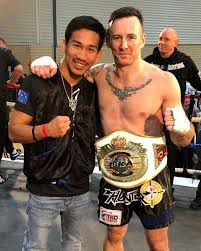
Adam Bailey is a 2x World Middleweight Muay Thai Champion, Head Coach of the Australian National Team, and co-founder of Supa Phat. He coaches kids at Pursuit Muay Thai every week and considers it the most rewarding part of his job. Follow Supa Phat on Instagram for training tips, gear drops, and community highlights.