


Is Muay Thai good for self defence? An honest breakdown
Let me start with the uncomfortable truth: the best self-defence skill you can develop has nothing to do with fighting. It's awareness. It's crossing the street. It's leaving a situation before it escalates. It's swallowing your ego when someone is trying to provoke you.
But if all of that fails and you have no choice, is Muay Thai going to help you? Yes. Significantly. It's one of the most effective martial arts for real-world self defence. But not for the reasons most people think, and it does have genuine limitations you should understand.
I've competed in over fifty professional Muay Thai fights. I've also been in situations outside the ring where training made a real difference. Not because I threw a spinning elbow. Because I understood distance, I could manage adrenaline, and I knew what being hit felt like. Those things matter far more than any specific technique.
What makes Muay Thai effective for self defence
Muay Thai wasn't designed as a self-defence system. It's a competitive fighting sport. But the skills it builds transfer directly to real-world situations in ways that many "self-defence" systems don't.
You learn to manage distance
The single most important skill in any physical confrontation is controlling the distance between you and the other person. In Muay Thai, you learn range instinctively. You know when someone is close enough to hit you. You know how to create space with a teep. You know how to close distance when you need to.
This doesn't sound dramatic, but it's the skill that matters most. If someone is getting aggressive, a trained Muay Thai practitioner naturally positions themselves at the right distance — close enough to respond, far enough to have reaction time. Untrained people tend to either stand too close (getting hit before they can react) or too far away (unable to respond if the situation escalates).
You know what it's like to get hit
This is the one that separates combat sports from self-defence seminars. If you've sparred regularly, you know what it feels like to take a punch. Your body has experienced it. Your brain doesn't panic when it happens.
Most people who haven't been hit freeze when it happens for the first time. The shock, the adrenaline, the fear. It overwhelms them. A Muay Thai practitioner who's been sparring for six months has already processed that shock dozens of times. They don't freeze. They respond.
The clinch is a genuine advantage
Most real-world altercations end up at grabbing distance. Someone grabs your shirt, your collar, pushes you against a wall. This is where most untrained people feel completely helpless.
Muay Thai's clinch gives you tools that very few other striking arts provide. You can control someone's posture, off-balance them, deliver knees and elbows at close range, and create separation when you need it. The clinch is the single most underrated self-defence tool in any martial art.
Your weapons are devastating
Muay Thai uses shins, elbows, and knees — the hardest, most powerful natural weapons the human body has. A well-placed elbow or knee from a trained Muay Thai practitioner can end an altercation immediately. These aren't delicate techniques that require perfect conditions to work. They're simple, powerful, and effective under stress.
Compare this to arts that rely on wrist locks, pressure points, or complex joint manipulations. These techniques are extremely difficult to execute on a resisting, adrenaline-fuelled person. Muay Thai's tools are gross motor movements. They work when your hands are shaking and your heart rate is through the roof.
Conditioning saves you
A street confrontation is the most physically intense experience most people will ever have. The adrenaline dump alone can exhaust an untrained person in seconds. Muay Thai training builds the cardiovascular fitness and mental composure to function under that kind of stress.
You won't gas out in ten seconds. You won't freeze because your body has been here before. That conditioning advantage is enormous when the other person is running on pure adrenaline and exhausting themselves in the first exchange.
Where Muay Thai falls short
An honest breakdown has to include the limitations. Muay Thai is excellent for self defence, but it's not complete.
Ground fighting is the main gap
If someone tackles you to the ground and you have zero grappling experience, your Muay Thai skills become significantly less useful. You can't kick from your back. You can't throw elbows effectively if someone has top position and is pinning your arms.
This is the strongest argument for cross-training in BJJ or wrestling. Even a basic understanding of ground positions — how to get back to your feet, how to prevent being mounted, how not to get choked — closes the biggest gap in a Muay Thai practitioner's self-defence toolkit. We cover this comparison in detail in our Muay Thai vs BJJ article.
Multiple attackers change everything
No martial art prepares you adequately for multiple attackers. But Muay Thai's one-on-one focus means you're always positioned facing one person. If there are two or more, the calculus changes completely. Striking is actually preferable to grappling here (you don't want to be tied up on the ground with one person while another kicks you), but the honest answer is that no amount of training makes multiple attackers a manageable situation. Leave if you can.
Weapons change everything
If someone has a weapon, nothing you learned in Muay Thai class is going to help you the way running will. Any martial art that claims to reliably disarm armed attackers is selling fantasy. The safest response to a weapon is distance and escape.
Rules don't exist outside the ring
In Muay Thai competition, you fight with rules, a referee, rounds, and gloves. On the street, none of that exists. There are no time limits, no weight classes, no one to stop the fight if you're hurt, and the surface under you is concrete, not canvas. This changes the risk calculation dramatically. A takedown that would be fine in a gym becomes a potential skull fracture on a footpath.
Self defence benefits beyond technique
The physical techniques are only part of the self-defence value Muay Thai provides. The less visible benefits are arguably more important.
Confidence that prevents confrontation
People who train regularly carry themselves differently. It's not aggression. It's a quiet confidence in their body and their ability to handle themselves. This confidence changes how others perceive you. Predators and aggressors are looking for easy targets. Someone who moves with purpose, makes eye contact, and doesn't shrink from confrontation is not an easy target.
Most confrontations are avoided before they start because of how you carry yourself. Muay Thai builds that carry naturally.
Stress inoculation
Sparring is controlled exposure to the stress of physical confrontation. Your brain learns to function under pressure. Your decision-making improves when adrenaline is flowing. This transfers directly to any high-stress situation, not just fighting.
Ego management
Good Muay Thai training teaches you humility. You get hit. You lose rounds. You tap when someone better catches you. This experience makes you less likely to escalate a confrontation over ego. The people who start fights are usually the ones who've never been in one. Trained fighters know how badly things can go and are far more likely to walk away.
What to focus on if self defence is your goal
If self defence is a primary motivation for training (and it's a perfectly valid one), here's what to prioritise in your Muay Thai training.
- Spar regularly. Technical pad work builds skills, but only sparring builds the ability to function under pressure against a resisting opponent. Our sparring guide covers how to approach this safely at every level.
- Drill the clinch. Close-range control is the most transferable skill to real-world situations. Don't skip clinch rounds.
- Train simple combinations. Under real stress, you won't remember a five-strike combination. You'll remember a jab-cross. A teep. A knee from the clinch. Drill the basics until they're automatic.
- Practise awareness. Watch how experienced fighters read a room, position themselves, and manage space. These habits transfer directly to daily life.
- Consider adding some grappling basics. Even two months of BJJ or wrestling fundamentals closes the biggest gap in your skill set. Learn to get back to your feet from the ground.
How Muay Thai compares to other martial arts for self defence
A brief comparison against the arts most commonly promoted for self defence.
- Muay Thai vs Boxing: Boxing teaches excellent head movement, footwork, and hand speed, but only uses fists. Muay Thai adds kicks, knees, elbows, and the clinch — significantly more tools for real-world situations. We break down the Muay Thai vs kickboxing comparison in another article, which covers similar ground.
- Muay Thai vs BJJ: Muay Thai is better standing. BJJ is better on the ground. For self defence, you ideally want both. If choosing one, Muay Thai covers the more common scenario (standing altercations).
- Muay Thai vs Krav Maga: Krav Maga is designed specifically for self defence but often lacks pressure testing. If you've never been hit or sparred, the techniques fall apart under stress. Muay Thai's sparring culture builds stress-tested skills.
- Muay Thai vs Karate/TKD: Traditional martial arts build discipline and technique but often train with limited contact. Full-contact Muay Thai sparring creates a much more realistic training environment for self-defence preparation.
The honest bottom line
Muay Thai is one of the most practical martial arts for self defence. It teaches you to strike effectively, manage distance, control someone in the clinch, and stay calm under pressure. The conditioning, confidence, and awareness it builds are arguably more valuable than any specific technique.
But no martial art is complete for self defence. Muay Thai's ground-fighting gap is real. The best approach is to train Muay Thai as your base and add some grappling fundamentals if self defence is a serious concern.
And above all: the best fight is the one that never happens. Awareness, de-escalation, and the willingness to walk away will protect you far more reliably than any elbow strike.
Frequently Asked Questions
How long does it take to learn enough Muay Thai for self defence?
Within 3-6 months of consistent training (2-3 sessions per week), you'll have a solid foundation of basic strikes, distance management, and clinch awareness. More importantly, you'll have the confidence and composure that comes from regular sparring. You don't need to be a fighter to benefit from training. Even basic competence in Muay Thai puts you significantly ahead of someone with no training.
Is Muay Thai the best martial art for self defence?
There's no single "best" martial art for self defence. Muay Thai is among the most practical because it trains full-contact striking, clinch work, and builds the conditioning to function under real stress. Its main limitation is ground fighting. MMA-style training (combining Muay Thai with BJJ or wrestling) provides the most complete self-defence skill set. But if you're choosing one art, Muay Thai is a strong choice.
Can Muay Thai work against a bigger opponent?
Size matters in any physical confrontation. But Muay Thai's use of elbows, knees, and kicks (which generate power from hip rotation rather than upper body strength) gives smaller practitioners effective tools against bigger opponents. Distance management is key. A well-placed teep or low kick from a smaller, trained fighter can neutralise a larger untrained person's strength advantage. Technique and composure overcome size more often than people expect.
Should I train Muay Thai or a dedicated self-defence system?
Train Muay Thai. Dedicated self-defence systems (Krav Maga, most women's self-defence courses) teach techniques but rarely pressure-test them against resisting opponents. Muay Thai's sparring culture means you've actually experienced controlled confrontation. You know what adrenaline feels like. You know what it's like to be hit. This matters far more than a catalogue of techniques you've only practised on compliant partners.
Does Muay Thai teach you to defend against weapons?
No, and be sceptical of any martial art that claims to reliably teach weapon defence. The safest response to a weapon is creating distance and leaving. Muay Thai's awareness training and conditioning may help you react faster, but the honest advice is: if someone has a weapon, your priority is escape, not engagement. No technique learned in a gym is worth testing against a knife.
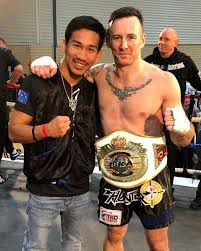
Adam Bailey is a 2x World Middleweight Muay Thai Champion, Head Coach of the Australian National Team, and co-founder of Supa Phat. He believes the best self-defence is awareness, humility, and the willingness to walk away — but that Muay Thai gives you options when walking away isn't possible. Follow Supa Phat on Instagram for training tips, gear drops, and community highlights.