


The Muay Thai clinch: positions, rules and how to train it
Updated
Ask a Thai trainer what separates Muay Thai from kickboxing and he won't say elbows. He'll grab you behind the neck.
In this guide:
- What the Muay Thai clinch is
- Why the clinch wins fights
- The Muay Thai clinch positions that matter
- Entering and exiting the clinch
- Knees, elbows and sweeps from the clinch
- Sweeps from the clinch
- Is clinching legal? Rules by ruleset
- How to train the Muay Thai clinch: your first 90 days
- Five clinch drills that work
- The clinch mistakes I see most
- Gear that matters in clinch work
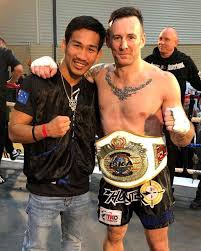
I've been lucky enough to build fighters from nothing all the way through to multiple world champions, and to represent my country at many World Championships as Australian team captain and as head coach. Watch thousands of high level athletes compete in one place and it's clear: the cream of the crop are always the ones who can clinch.
The gap is massive, and I know because I lived it. I came into Muay Thai competition at 13, out of a kickboxing gym. I could kick and I could punch, but I knew nothing about the clinch. I got away with it in the juniors, then at 17 I was thrown into the fire at a gym in Bangkok with no idea what I was doing, and I got absolutely mauled on the daily.
If I had my time over again, I wish someone had pulled me aside early and really honed in on my clinching. The clinch is often overlooked because it's one of the hardest things to learn. But sometimes doing the hardest thing yields the biggest results.
This is the guide I wish someone had handed me back then.
What the Muay Thai clinch is
The Muay Thai clinch is the standing grappling phase of a fight, where both fighters hold each other's head, neck or arms and fight for position to land knees and elbows, off-balance each other and sweep. It is the part of the sport kickboxing and boxing cut out, which is why Muay Thai and kickboxing look nothing alike once the range closes.
In Muay Thai, we just call it clinching. You'll also hear the word "plum", which Western gyms borrowed from Thai and narrowed down to one position: both hands locked behind the neck. If you wanted to liken that position to another martial art, the closest match is what wrestlers call a double collar tie. That's wrestling terminology, mostly American, and not something we'd ever say in Aussie Muay Thai, but it highlights how much crossover there is in combat sports technique.
Three ideas sit under everything in the clinch:
- Posture. The fighter who stays tall, hips forward and chin off the chest controls the exchange. The fighter bent at the waist eats knees. Most clinch work is a fight over whose posture breaks first.
- Balance. Every pull, turn and knee is aimed at putting the other person's weight where they don't want it. If you're on one leg or on your toes, you're about to get swept.
- Control before strikes. Knees from a bad position don't score and leave you open. Win the hands and the hips first.
Why the clinch wins fights
The clinch wins fights because it scores, it drains and it neutralises. Under traditional Thai scoring, a clean knee to the body from a controlled position is one of the highest value strikes you can land, and a sweep shows the judges who is in charge. We've broken down how Muay Thai scoring works in detail; the short version is that judges reward control, balance and effect, and the clinch puts all three on display.
It also wears people out faster than anything else in the sport. Carrying someone's weight on your neck while they knee you is exhausting in a way pad rounds never prepare you for. In rounds four and five the fighter with the better clinch looks fresher, and that fighter usually wins.
And it takes away a striker's game. A fast puncher or a long kicker needs space; close it and they're fighting your fight. It is also how a smaller fighter beats a bigger one, because timing in there beats raw strength more often than people expect.
The Muay Thai clinch positions that matter
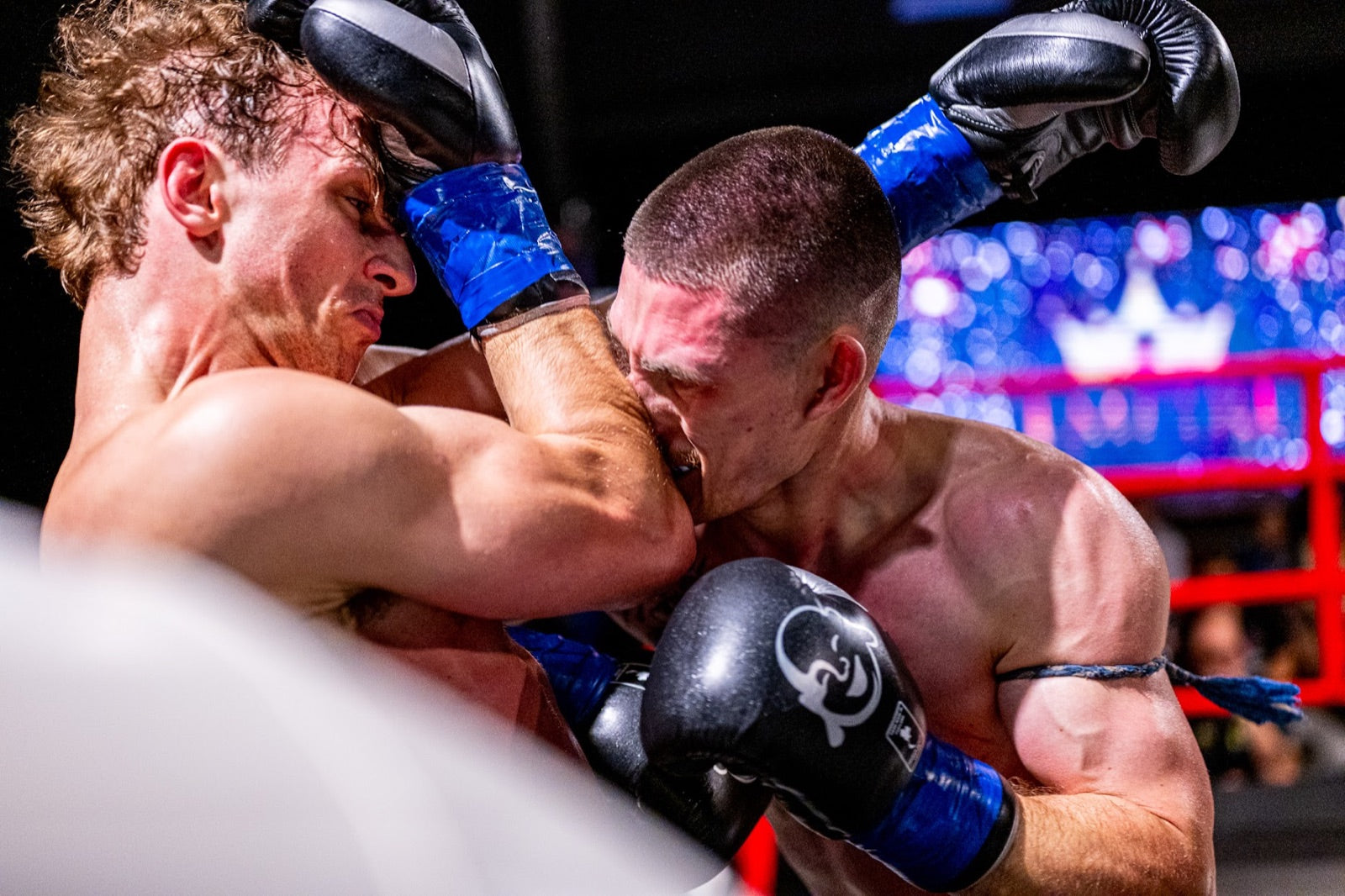
The main Muay Thai clinch positions are the double collar tie, the single collar tie with arm control, the over-under, the double underhooks (body lock) and the swim. If this is your first look at Muay Thai, that's terminology with an international flavour; Thai gyms don't name positions this way. Each has a grip, a purpose and a mistake I see every week.
| Position | Grip | What it sets up | Common mistake |
|---|---|---|---|
| Double collar tie (the "plum") | Both hands cupped on the crown of the head, forearms squeezing the neck, elbows pinched in and flared to the fold of the opponent's armpits | Breaking posture, straight knees to body and head | Clasping the fingers (this doesn't work with boxing gloves on) or gripping the back of the neck |
| Single collar tie with arm control | One hand on the back of the head, the other on the bicep or tricep | Turning them, diagonal knees to the open side, elbows when the grip is high | Letting the controlling hand drift to the forearm, which gives their arm back |
| Over-under | One arm over their shoulder, one under their armpit, chest to chest. Head tucked under their chin | High pressure clinch work, often used to shut down counters | Standing square. Angle the hips so the underhook side does the work |
| Double underhooks (body lock) | Both arms under theirs, hands locked behind the back | Lifting their posture, driving them back, knees to the thighs and body | Ducking the head to get the lock, which puts your face in front of an elbow |
| Swim | Transitional. Your hand slides inside theirs to take the inside position | Moving from a bad position to any of the above | Swimming with the arm only. Swim and step, so your hips arrive with your hand |
Source: positions, grips and cues as coached by Adam Bailey at Pursuit Muay Thai.
The rule across all of them: inside position wins. If your hands are inside theirs, you control their head and they control your arms. If a position goes wrong, don't hang on to it. Swim, reset, take the inside again.
Entering and exiting the clinch
You enter the clinch behind a punch, off the long guard or off a caught kick, and you exit by recovering your posture, clearing a hand and stepping off at an angle. Both are techniques to drill, not things that happen to you.
Getting in
You enter the clinch using a long guard, behind punches, or off a caught kick if you're setting up a sneaky sweep. Never with both hands out in front, reaching like a zombie. I call that sleepwalking, because you'll end up snoring from the punches on the way in. The entries I teach first:
- Behind the cross. Throw the right hand and, instead of pulling it back, follow through with a full step to southpaw (if you're orthodox, or vice versa). You've bridged the gap. Let the hand land on the back of their head as your first collar tie. The lead hand follows a beat later.
- Off the long guard. Extend the lead arm to their shoulder or neck as they come forward, then close with the rear hand once you've stopped their momentum.
- Catching a body kick. Catch, step in and take the head with the free hand. You're already inside their arms.
Getting out
Breaking a clinch is a skill, not a scramble. Posture first: hips forward, head up, chin tucked. Then clear a hand, by pushing their elbow up and across or swimming an arm inside to frame on the chest. In essence it's the long guard entry in reverse. Step off at an angle as you release, never straight back, because straight back is where the knee follows you.
Knees, elbows and sweeps from the clinch
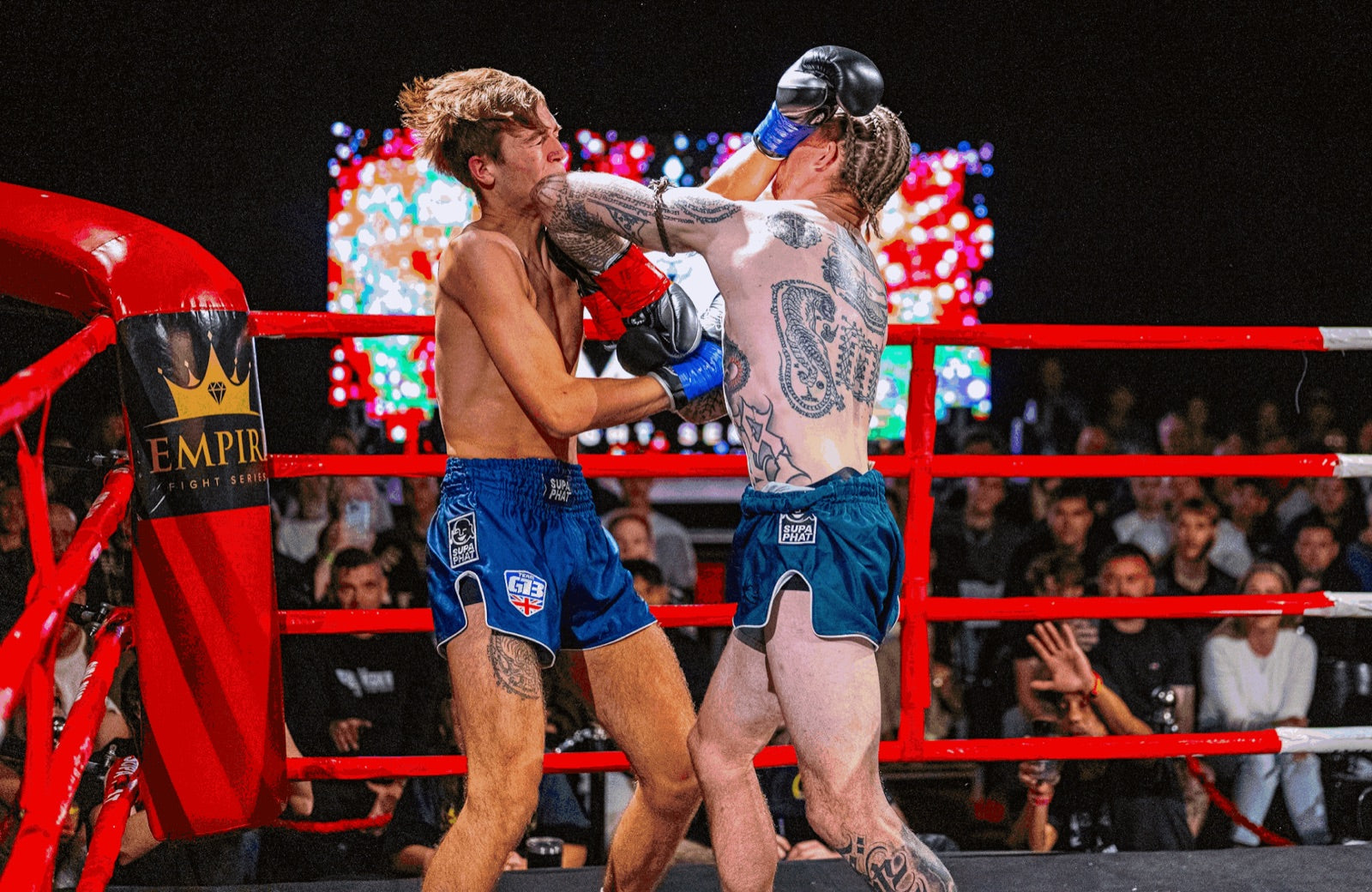
From the clinch you score with knees to the body and thighs, short elbows as grips break, and sweeps that put your opponent on the canvas. Knees are the bread and butter; sweeps finish the exchange.
Knees
The straight knee to the body is the clinch strike that wins rounds. It comes from the dominant inside position, with both hands around the neck. Pull their posture down as the knee spears up the middle, and drive through the hips rather than snapping the leg. Think belly button through to the spine, not knee up under the chin.
The diagonal knee to the ribs, or chambering knee, is for when you don't have that dominant position. When the clinch is 50/50 and you're both jostling for the inside, chamber the knee and sling it around to hit the body. The knee to the thigh keeps you scoring when the body isn't there.
Elbows
Clinch elbows are short and come the moment a grip breaks: the hand that leaves their head is already halfway to an elbow. Our elbow techniques guide covers the angles. For the clinch, the thing to know is that elbows are legal for adult professionals under every ruleset below; amateur and novice classes pad or restrict them, and junior divisions restrict them further.
Sweeps from the clinch
Muay Thai sweeps knock your opponent off balance using the arms, hips and a step. They are never a hip throw or a leg reap. Three worth owning:
- The pull and turn. With a hand behind their neck, pull their head towards your hip as you step your foot back and out. Their weight goes over their toes and they fall where you point them.
- The inside knee bump. You can do this from almost any clinch position. Drive your knee into the inside of their lead thigh as you turn them. The standing leg buckles.
- The caught kick turn. Catch the kick, pull the leg across your body and push the shoulder the other way so they spin and fall. No leg across theirs and no lift, which keeps it legal under IFMA and Australian rules as well as in Thailand.
The part of the foot you use matters. You can't use a hooking action. If you make contact with the part of the foot you'd kick with, you're good to go. In my experience officials are watching foot contact closely at the moment, so keep it clean.
Learn sweeps with a coach, on mats, with a partner who knows how to fall. People get hurt landing, not from the sweep. And know the lines. Under IFMA and Muaythai Australia rules these are all fouls: hooking or immobilising the legs with the calf, ankle or heel, throwing with the hip, tripping without a Muay Thai skill, and holding a caught leg while pushing forward more than two steps without striking.
Is clinching legal? Rules by ruleset
Yes, clinching is legal in Muay Thai under every major ruleset: Thai stadium, ONE Championship, IFMA amateur and Australian rules. What changes is how long the referee lets you stay in it, whether elbows are padded or restricted for amateurs, and which throws are allowed. The question comes up because most people meet the clinch first in kickboxing or MMA, where it is cut short.
| Ruleset | Clinching allowed? | Time limit or referee break | Elbows | Notes |
|---|---|---|---|---|
| Thai stadium (Rajadamnern, Lumpinee) | Yes | No written time limit. The referee breaks when nobody is working or one fighter is only holding | Yes, unpadded | Traditional bouts are 5 x 3 minutes |
| ONE Championship | Yes | Fighters may attack from the clinch until the referee separates them. ONE's published rules give no count | Yes, unpadded | 4 oz gloves. 3 x 3 minutes, 5 x 3 for world titles |
| IFMA amateur | Yes | No written time limit. Referee calls "YAEK" (break), both fighters step back; ignoring it is a foul | Seniors, U23 and youth 16 to 17: no restrictions, elbow guards worn below senior level. Youth divisions under 16 restrict elbows and knees to the head, and the youngest allow no head strikes (Rule 27.3) | Seniors fight 3 x 3 minutes. Hip throws, hooking the legs with the calf, ankle or heel, and holding a caught leg while pushing more than two steps without striking are fouls (Rule 27.2) |
| Australia (Muaythai Australia class system; MTA is the IFMA affiliate) | Yes | No written time limit. Referee calls "YAK/BREAK", both fighters step back at least one step | C-class (novice): optional, elbow pads mandatory. B-class (amateur): with elbow pads. A-class (professional): unpadded | C-class 3 x 2 minutes, B-class 3 or 5 x 2, A-class 3 or 5 x 3. Judo and wrestling throws are fouls. State combat sports laws sit on top, so the promoter's fight agreement is what binds you |
Sources: Rajadamnern Stadium rules · ONE Championship rule sets · IFMA Rules v2.04 (revised 10 April 2023; Rules 4, 12.3, 23.3, 25, 27) · Muaythai Australia Rules 2024 (Rules 11.2, 16, 18 and the Athlete Class System). Rules change; check the current version before you sign.

How to train the Muay Thai clinch: your first 90 days
Muay Thai clinch training works best as a progression: posture and grip fighting, then knees with control, then live clinch rounds. Most people skip to the third stage, which is why most people's clinch is a shoving match.
One interesting thing about clinch training is how long the sessions run. More often than not, gyms will spend anywhere between 20 and 40 minutes on clinch in one block. That works against a lot of what we know from sports science. If a round is three minutes, how efficient is it to clinch for that long without a break? Is the benefit mental? What are the real gains?
My answer is both, and it depends where you are. A beginner, or a member early in their journey, clinches in three-minute rounds. A pro varies it, because different parts of a fight camp target different energy systems. Old school is long, slow and continuous, and there's a place for that too.
Whatever the duration, relaxation is the key. You can't be two bulls butting heads. The clinch is a dance: pushing, pulling and using your opponent's force against them.
Days 1 to 30: posture and hands
No knees yet. Spend two or three rounds a session fighting for position with a partner. Win the inside hands, keep your hips close and your head up, feel your posture break and get it back. Learn the swim. Learn to step when you pull. If your neck is sore and your forearms are burning, you're doing it right.
Days 31 to 60: knees with control
Add light knees to the thighs and body, with one rule: a knee is only thrown from a position you've already won. Start the pull and turn sweep on mats. Keep one round a session for pure position fighting.
Days 61 to 90: clinch rounds
Live clinch rounds at a pace you can hold, three minutes on, one off, two or three rounds, with a coach watching. Our sparring guide applies here: the goal is to learn, not to win the round. Clinch work should also be in your strength and conditioning thinking by now, because neck, grip and hip strength decide who is still standing tall in round five.
Five clinch drills that work
- Neck and grip fighting. No strikes. Fight for the double collar tie for a round. Whoever gets it holds it, the other swims out. Reset.
- Knee reps for timing. One partner holds a belly pad in the clinch. The other throws straight knees, each one timed to the pull. Twenty each, swap.
- Swim drills. Start with your partner holding the inside position. Swim one arm, then the other, stepping as you go. Slow first, then against resistance.
- Wall posture. Heels, hips and shoulders against a wall while your partner pulls down on a collar tie. Keep everything on the wall. Thirty seconds on, thirty off.
- Clinch rounds with a score. Three minutes, one point per clean knee from a controlled position, two for a sweep. It keeps everyone honest about position before strikes.
The first and fourth need no gym, just a partner, and the drills you can do anywhere article has a towel grip version for days you can't get to class.
The clinch mistakes I see most
- Bending at the waist to pull. It feels strong. It gives them your head and your balance in one go. Pull with a straight back and your hips forward.
- Interlocking the fingers. You can't adjust, you can't let go fast, and a hard posture up hurts your hands. Cup the head, forearms tight.
- Throwing knees from nowhere. A knee before you've won position doesn't score and invites a sweep.
- Fighting on your toes. Heels down. Light fighters get moved.
- Stepping straight back to exit. That's where the knee lives. Angle out, hand on their bicep or chest as you go.
- Treating it as strength work. Strong people lose to good people in the clinch all day. If you're muscling it, you haven't learnt it yet.
- Only five minutes at the end of class. Start there and build from it. The clinch needs the same reps as your kicks. Our beginner mistakes piece covers the other habits worth fixing early.
Gear that matters in clinch work
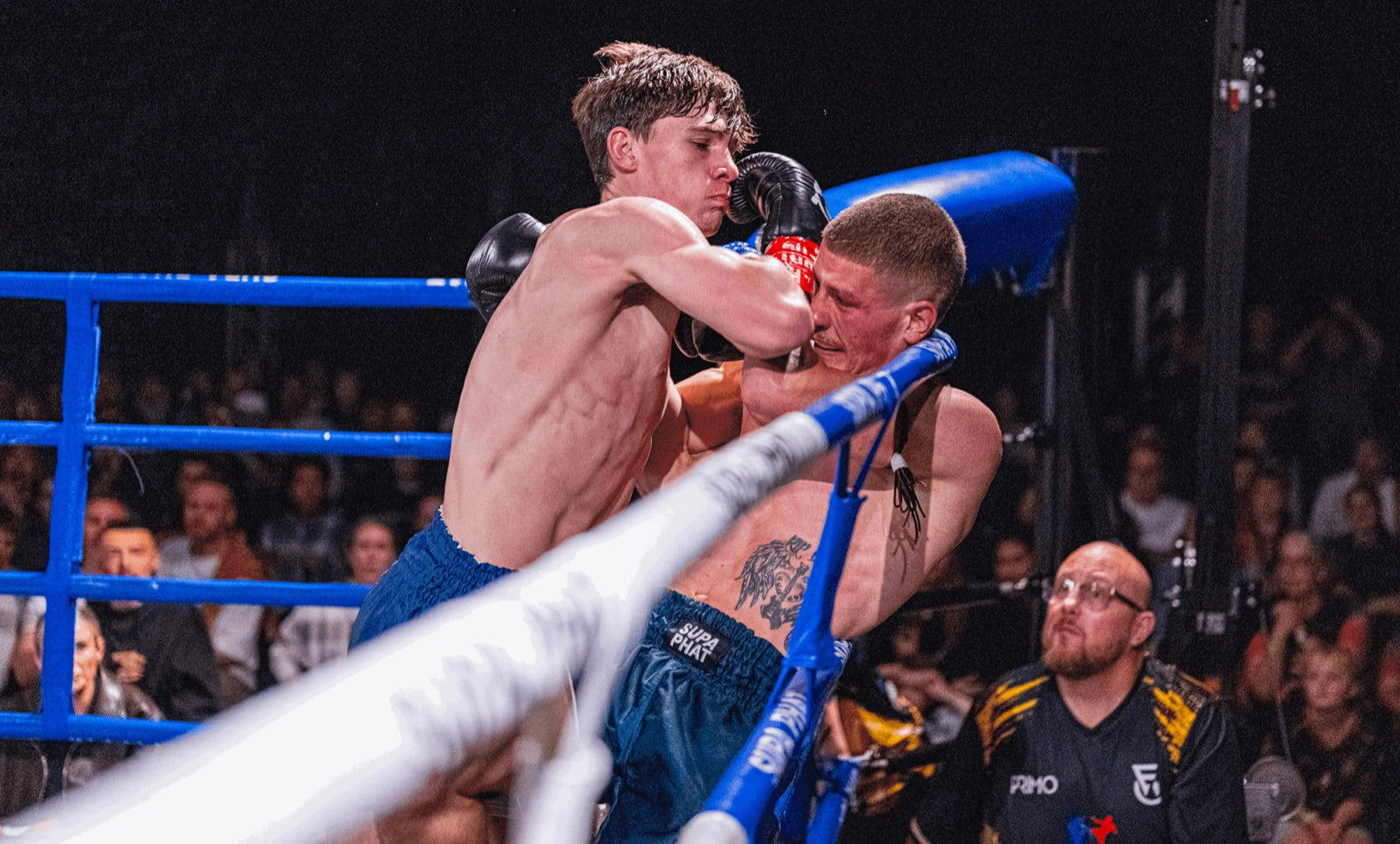
The clinch doesn't need much, but it punishes the wrong shorts. Knees need the full range of your hips, and a long or tight leg catches at the top of the knee. Our Muay Thai shorts sit on the hips so the leg opens fully, in microfibre that doesn't hold sweat or stick to your quad when you're chest to chest, with a layered construction that stops them riding up. Ghost and Heritage share the traditional cut; Shadow is the tailored athletic cut with a split side hem for the same reason.
Clinch in your gloves. Not bare-handed, and not in wraps alone. Go with smaller gloves, 10 or 12 ounce, and definitely not 16. That simulates what you'll actually do in the ring. Bare hands swim and slip into tight spaces you'll never find with gloves on in a fight, and gloves rule out grips you can't use on fight night, like interlocking your fingers. Our Sentinel Boxing Gloves come in 10oz and 12oz for exactly this.
Frequently asked questions
Is clinching illegal in Muay Thai?
No. Clinching is legal under every major Muay Thai ruleset, including Thai stadium rules, ONE Championship, IFMA amateur and Australian rules. Referees break clinches that stall, and ONE Championship breaks them faster than traditional stadium bouts. Hip throws, leg reaps and judo style throws are fouls under IFMA and Australian rules.
How long does it take to get good at the Muay Thai clinch?
Give it 90 days of two or three clinch rounds a session before you judge yourself: the first month is posture and hands, the second adds controlled knees, the third is live rounds. Competent takes about that long. Good takes years, and the Thais start at six, so measure yourself against last month, not against them.
What are the main Muay Thai clinch positions?
The five to learn first are the double collar tie (the plum), the single collar tie with arm control, the over-under, the double underhooks or body lock, and the arm drag or swim used to move between them. In every position, the fighter with inside hand position and better posture is in control.
How do you get out of the Muay Thai clinch?
Recover your posture first: hips forward, head up, chin tucked. Then clear a hand by pushing their elbow up and across or swimming an arm inside to frame on the chest. Step off at an angle as you release. Stepping straight back is the most common mistake, because that is where the knee follows you.
Who are the best Muay Thai clinch fighters to study?
Start with Dieselnoi Chor Thanasukarn, whose knees from the clinch are still the reference point decades on, and Petchboonchu FA Group, who built a career on control and knees at Lumpinee and Rajadamnern. Watch how they win position before they strike, not just the knees.