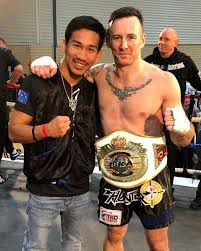



Your first Muay Thai fight: the complete guide from 'am I ready?' to walking out of the ring
I've cornered hundreds of first-time fighters. I've watched their hands shake during wrapping. I've seen the colour drain from their face when the opponent walks out. I've talked them through the adrenaline dump in round one when nothing they practised in the gym seems to work. And I've watched them walk out of the ring afterwards with a look on their face that nothing else in life produces.
Your first Muay Thai fight will be the most intense, nerve-wracking, exhilarating experience of your training life. It doesn't matter if it's an interclub, an amateur bout, or a C-class fight on a local show. The moment you step through those ropes knowing someone is trying to hit you for real, everything changes.
This is the guide I wish I could hand to every fighter I corner. Everything from how to know you're ready, to what happens between rounds, to what you do when it's all over.
How do you know you're ready?
This is the question I get asked most. And the honest answer is: your coach should tell you. Not the other way around.
A good coach knows when a fighter is ready. They've watched you spar, seen how you respond under pressure, and know whether your technique is solid enough to keep you safe. If your coach hasn't mentioned fighting and you want to, have the conversation. But trust their answer. If they say not yet, it's not yet.
If you're at a gym where the coach doesn't know you well enough to make that call, that's a different problem. You need a coach who sees you train regularly. Our guide on how to choose a Muay Thai gym covers what to look for.
The readiness checklist
There's no fixed timeline. I've cornered fighters who were ready after 12 months and others who needed three years. But there are markers:
- You've been sparring consistently for at least 3-6 months. Not just light technical sparring. Real sparring where the pace picks up, where you've been hit clean and had to recover, where you've felt the pressure of someone coming forward. Read our sparring guide if you're still building this foundation.
- You can spar 3-5 rounds without falling apart. Fatigue changes everything. If you gas out in round two of sparring, you'll gas out in round one of a fight. The adrenaline dump in your first fight burns energy faster than anything you've experienced in training.
- You have a basic game plan. Not a 15-move combination sequence. A simple plan: "I'm going to use my jab to control distance, kick the body when I see an opening, and clinch when they pressure me." Something your brain can hold onto when the adrenaline hits.
- You can take a hit and keep working. Everyone gets hit. The question is whether you freeze, panic, or reset and continue. If a clean shot in sparring shuts you down, you're not ready for competition yet.
- Your coach says you're ready. Worth repeating.
The 8-week fight camp
Once you've accepted a fight, the preparation shifts. This isn't regular training anymore. This is a fight camp, and it has a structure.
Weeks 8-6: build the engine
This is where you push your conditioning. Extra running, extra rounds on the bag, extra sparring. You're building the cardio base that will carry you through fight night. Your strength and conditioning work should be at its highest volume here, not in the final weeks.
Sparring should be frequent and varied. Spar different body types, different styles. Get rounds in with southpaws if your opponent is a southpaw. If you know who you're fighting, study them. Watch videos. Identify their habits. But don't obsess. At this level, your game plan will be simple, and that's fine.
Weeks 5-3: sharpen the tools
This is pad work and technical sparring. You're not building new skills anymore. You're sharpening the ones you have. The combinations your coach drills with you on the pads should be the ones you'll actually throw in the fight. Keep it simple. Three or four combinations you can throw under pressure.
This is also when you should be dialling in your weight. If you need to cut, our guide on weight cutting for Muay Thai covers the safe approach. For a first fight, my strong advice: fight at your natural weight. Don't add weight cutting stress to an already stressful experience. Fight where you walk around. If you're 72kg, fight at 72kg or the nearest class above. The weight cut can come later, once you know what fighting feels like without that extra variable.
Weeks 2-1: taper and trust
Reduce volume. Your body needs to recover and be fresh for fight night. Light pad work, light sparring, shadow boxing. This is the hardest part mentally because you'll feel like you should be doing more. You shouldn't. The work is done. Trust the camp.
Nutrition matters here. Eat well, sleep well, hydrate. Our Muay Thai diet guide has the details, but the short version: clean protein, complex carbs, plenty of water. No junk, no alcohol, no late nights.
Fight week
Fight week is where the nerves hit. Here's what to expect and how to handle it.
The nerves are normal
You will be nervous. You'll question whether you're ready. You'll have moments where you consider pulling out. Every single fighter I've ever cornered has felt this. It doesn't go away with experience. It just becomes familiar. The nerves mean you care. That's a good thing.
What helps: routine. Go to work. Train lightly. Eat your meals. Sleep at your normal time. Don't sit around overthinking. The more you fill your days with normal life, the less space there is for anxiety to take over.
Logistics to sort before fight day
- Gear check: Mouthguard (get a custom-fitted one, not a boil-and-bite), groin guard, shorts, gloves (the promoter may supply competition gloves, check the rules), wraps, towel, water bottle. Pack your bag the night before.
- Weigh-in: Know when and where the weigh-in is. Some events weigh in on the day, others the day before. Arrive on time. Bring your ID.
- Corner team: Your coach and one or two corner people. They should know the game plan. Confirm who's coming and when they're arriving.
- Rules: Understand the rule set. Amateur Muay Thai rules vary. Some allow elbows, some don't. Some use shin guards, some don't. Some score knockdowns differently. Know what you're walking into.
- Transport and timing: Know how you're getting there, where you're parking, what time you need to arrive. Fights often run behind schedule, but you need to be there early. Two hours before your bout is a safe margin.
Fight day
This is it. Here's how the day should flow.
Morning
Eat a proper meal 3-4 hours before your fight time. Something you've eaten before and know sits well. Rice and chicken. Oats and banana. Nothing experimental. Stay hydrated but don't overdo it. Sip water throughout the morning.
Do something to take your mind off the fight. Watch a movie. Go for a walk. Whatever keeps you calm. Some fighters like to visualise their game plan. Others prefer to distract themselves completely. Figure out what works for you.
At the venue
Arrive early. Find your coach. Locate the change rooms, the toilets, the warm-up area. Know where the ring is. These small familiarities reduce the feeling of being overwhelmed by a new environment.
Don't watch the other fights if they make you more nervous. Some fighters love watching the earlier bouts because it fires them up. Others find it increases their anxiety. Know yourself.
Warm-up
Your coach will run your warm-up, and it should mirror what you do before sparring. Light shadow boxing, pad work at 60-70% intensity, stretching. The warm-up is about loosening up and getting into fight mode, not exhausting yourself. 15-20 minutes is enough.
This is when your coach wraps your hands. If you're wearing your own PHAT WRAPS — MUAY THAI HAND WRAPS, make sure they're wrapped tight and clean. Your hands are your career. Protect them.
The Wai Kru Ram Muay
If you're fighting under traditional Muay Thai rules, you'll perform the Wai Kru Ram Muay before the fight. This is the ceremonial dance that honours your teacher, your gym, and the traditions of the sport. It's not optional, and it's not a performance. It's a mark of respect.
Your coach should teach you the basics before fight night. It doesn't need to be elaborate for your first fight. A simple, respectful Wai Kru shows that you understand the culture you're stepping into. You'll wear the Mongkon (headband) during the Wai Kru, and your coach will remove it before the fight begins.
Round one
Here's what will actually happen: the bell will ring, you'll walk to the centre, and your brain will go blank. The adrenaline dump is real. Everything you drilled in the gym will temporarily disappear. Your breathing will spike. Your legs will feel heavy. You'll throw your first combination too fast and too hard, burning energy you'll need later.
This is normal. Every first-time fighter experiences it. The key is to survive the first 30 seconds. Breathe. Find your jab. Use your teep to create distance. Don't try to win the fight in the first exchange. Just settle in.
Your coach's voice will cut through eventually. Listen to it. If they're saying "breathe" or "relax," that's your cue to slow down and find your rhythm.
Between rounds
Sit down. Breathe through your nose. Listen to your coach. They'll give you one or two things to focus on, not twelve. A good corner keeps it simple: "Use your jab," "Kick the body when they drop their hands," "Clinch when they pressure you." One instruction at a time is all your brain can process right now.
Sip water but don't gulp it. Your coach will manage this. They'll also check for cuts, apply Vaseline to your eyebrows, and make sure you're physically okay.
After the fight
Win or lose, you've done something most people never will. The emotional come-down after a fight is significant. You might feel euphoric, or you might feel empty. Both are normal. Adrenaline withdrawal is a real thing.
Thank your opponent. Touch gloves or show respect in whatever way feels natural. They just shared something intense with you. Win or lose, they helped you grow.
Thank your coach and corner. They invested their time and energy into your preparation and your safety.
Recovery
The week after your first fight, your body and mind will feel different. Here's what to expect.
Physical recovery
Take at least 3-5 days off training. Your body has been through more stress than a normal sparring session, even if the fight only lasted three rounds. Bumps, bruises, and soreness are expected. Ice anything that's swollen. If something doesn't feel right, see a doctor. Don't push through pain from a fight the way you'd push through muscle soreness from training.
Our recovery guide covers the full approach. The short version: rest, hydrate, eat well, and let your body repair before you start hitting pads again.
Mental recovery
This is the part nobody talks about. After your first fight, you'll replay it in your head for days. If you won, you'll replay the good moments. If you lost, you'll replay every mistake. Both are normal. Both are useful if you channel them into learning rather than obsession.
Talk to your coach about the fight within a few days. Get their honest assessment. What worked? What didn't? What would you change? This debrief is more valuable than any training session because it's grounded in a real experience, not a hypothetical one.
Some fighters feel a low after their first fight, regardless of the result. The build-up is so intense that when it's over, there's a void. If you feel flat, that's normal. It passes. Get back into regular training when your body is ready, and the rhythm of the gym will bring you back.
Gear for fight night
What you need depends on the rule set and the level of competition. Here's the standard breakdown.
What you'll definitely need
- Mouthguard: Custom-fitted by a dentist. Not negotiable. A boil-and-bite is better than nothing, but a custom mouthguard fits properly, lets you breathe, and actually protects your teeth.
- Groin guard: Steel cup, not a soft protector. Male and female versions exist. Don't skip this.
- Muay Thai shorts: Proper Muay Thai shorts that allow full range of motion. Our GHOST SERIES — MUAY THAI SHORTS are built for this. Lightweight microfibre that doesn't hold water, sits comfortably on the hips, and gives you full range for kicks and knees.
- Hand wraps: Your PHAT WRAPS — MUAY THAI HAND WRAPS go under the gloves. Pack a spare pair.
- Competition gloves: Check with the promoter. Many supply competition gloves (usually 10oz). If you need to bring your own, confirm the weight and brand requirements. For training camp, your SENTINEL BOXING GLOVES are what you'll be living in.
What you might need (check the rules)
- Shin guards: Required for some amateur and interclub bouts. Not required for professional or most C-class fights.
- Elbow pads: Some amateur rules require them.
- Headgear: Required in some amateur competitions, particularly for juniors.
- Ankle supports: Optional, but many fighters wear them for stability and to prevent mat burn.
What to pack in your bag
- Fight gear (shorts, wraps, mouthguard, groin guard)
- Warm-up gear (hoodie, joggers, skipping rope)
- Towel
- Water bottle
- Vaseline (for eyebrows and cheekbones)
- Spare wraps
- Change of clothes for after
- Snacks for after the fight (you'll be starving)
- Your phone for your corner team to film (you'll want to watch it back)
Understanding how you'll be scored
Before you step in the ring, understand the scoring system. Our full breakdown of how Muay Thai fights are scored explains the details, but here's what matters for your first fight.
Clean technique scores higher than wild swinging. A well-placed body kick scores better than three rushed punches. Judges reward control, composure, and effective striking. They notice when a fighter uses their range, controls the pace, and executes clean technique under pressure.
For your first fight, this is actually reassuring. You don't need to be aggressive. You need to be composed. Throw your techniques cleanly. Use your jab. Land your kicks. If you get clinched, work for position. The fighter who looks like they're in control usually wins the close rounds.
The most common first-fight mistakes
I see the same mistakes from first-time fighters every time. If you know about them, you can avoid them.
- Going too hard too early. The adrenaline makes you throw everything in round one. Then you have nothing left for rounds two and three. Pace yourself. The fight is three rounds, not thirty seconds.
- Forgetting to breathe. Sounds stupid. It's not. Fighters hold their breath under pressure. Exhale on every strike. Breathe through your nose between exchanges. If you're gasping, you've forgotten this.
- Abandoning the game plan. You spent eight weeks drilling specific combinations and strategies. In round one, most first-timers forget everything and resort to street-fight instincts. When you feel the panic, go back to basics. Jab. Teep. Breathe. Reset.
- Not listening to their corner. Your coach can see things you can't. If they're telling you to kick the body, kick the body. You brought them for a reason.
- Overthinking between rounds. Sit down, listen to one instruction, and go back out. Don't try to redesign your entire game plan between rounds. One adjustment at a time.
Frequently Asked Questions
How long should I train before my first Muay Thai fight?
There's no universal answer. Most first-time fighters have trained for 12-24 months, with at least 3-6 months of consistent sparring. The timeline depends on your training frequency, your natural attributes, and your coach's assessment. Your coach should tell you when you're ready, not the calendar.
What's the difference between an interclub, amateur fight, and professional fight?
An interclub is an informal bout between gyms, usually with shin guards, headgear, and lighter contact. An amateur fight is a sanctioned competition with a referee and judges but often with protective equipment and modified rules (some limit elbows or clinch time). A professional fight has no protective equipment beyond gloves, wraps, and a groin guard, with full Muay Thai rules including elbows and unlimited clinch. Most first-time fighters start with interclubs or amateur bouts.
What weight class should I fight at for my first fight?
Fight at your natural walking weight or the nearest class above it. Cutting weight for your first fight adds unnecessary stress and can hurt your performance. You're already dealing with adrenaline, nerves, and the unknown. Don't add dehydration and energy depletion to the list. Weight cutting is a skill that can come later once you have ring experience.
How do I deal with pre-fight nerves?
Accept them. Every fighter gets nervous. The nerves are your body preparing for a high-stress event. What helps: maintain your normal routine during fight week, visualise your game plan (not the outcome), trust your training, and lean on your coach. On fight day, a structured warm-up transitions your nervous energy into focused energy. Once the bell rings, the nerves usually fade within the first exchange.
What if I lose my first fight?
Then you've learned more in three rounds than most people learn in a year of training. Losing a fight is not failure. It's data. Debrief with your coach, watch the footage, identify what to work on, and get back in the gym. Most of the best fighters I know lost their first fight. What matters is whether you come back smarter.
Adam Bailey is a 2x World Middleweight Muay Thai Champion, Head Coach of the Australian National Team, and co-founder of Supa Phat. He's cornered hundreds of first-time fighters and maintains that the first fight is always the one that matters most. Follow Supa Phat on Instagram for training tips, gear drops, and community highlights.