


Muay Thai vs kickboxing: what's actually different (and why it matters)
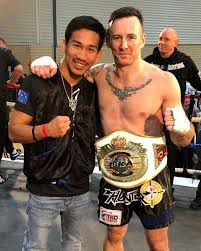
I've fought under both rule sets. Muay Thai and kickboxing. To someone watching, they look similar enough. Two people in a ring, throwing punches and kicks at each other. But step into the ring and the difference hits you immediately.
In kickboxing, you're moving constantly. Bouncing. Circling. Looking for angles. You throw combinations in bursts, then you're out again. It's fast, it's dynamic, and it rewards volume.
In Muay Thai, you're planting your feet. You're waiting. You're patient. When you strike, it's deliberate. When someone closes distance, you don't back away. You grab them, control them, and make them pay in the clinch.
Same ring. Completely different fight.
The eight limbs vs the four
This is the most obvious difference, and it shapes everything else.
Muay Thai is called "the art of eight limbs" because you strike with eight contact points: two fists, two elbows, two knees, and two shins. Everything is a weapon. You can punch, elbow, knee, kick, sweep, and clinch. The full toolkit.
Kickboxing restricts you to four: fists and feet (typically the instep or top of the foot for kicks, unlike Muay Thai's shin contact). No elbows. No knees in most rule sets (K-1 and Glory allow limited knees, but only in very restricted circumstances). No clinching beyond a single strike before the referee breaks you apart.
That sounds like a small rule change. It's not. It changes the entire fight.
When elbows are legal, close-range fighting becomes viable. You can work inside the pocket without just trading punches. When knees are legal, the clinch becomes a battleground instead of a pause in the action. When sweeps are allowed, you can punish someone for kicking carelessly.
In kickboxing, those tools are gone. The fight stays at mid-to-long range. You're looking for clean punches and kicks. You're not looking to tie someone up or dump them on the canvas.
The clinch changes everything
This is where the sports diverge most sharply.
In Muay Thai, the clinch is a core part of the fight. When you grab someone, the action continues. You're fighting for dominant position, controlling their head and posture, landing knees, throwing them off balance. A strong clinch game can win you rounds. It can win you fights.
If you've never experienced a Muay Thai clinch, it's exhausting. You're locked together, grinding for position, trying to break their structure while they're trying to break yours. It's not glamorous. It's brutal, technical, and relentless. You can read more about why the clinch fundamentals are so important in Muay Thai.
In kickboxing, the clinch doesn't exist. The moment fighters tie up, the referee steps in and separates them. You might land a single knee before the break, but that's it. There's no extended grappling. No position battles. No grinding someone down in the clinch.
This one rule change shifts the entire strategy. In Muay Thai, moving backwards is often seen as losing. You stand your ground, you press forward, and if someone gets close, you welcome it. In kickboxing, you're rewarded for lateral movement, angles, and getting out of range after you strike.
Stance and movement philosophy
Muay Thai fighters stand more upright, weight on the back leg, hands high. The front leg is light so you can check kicks quickly or fire off a teep (push kick) without telegraphing. You're not bouncing. You're planted, balanced, and ready to explode or defend.
Kickboxers use a more bladed stance, similar to boxing. Weight is distributed more evenly between both legs. Hands are slightly lower to allow faster hand combinations. You're on the balls of your feet, bouncing, moving, creating angles.
The footwork reflects the rule sets. In Muay Thai, backward movement can cost you points with judges. You're expected to meet your opponent head-on, control the centre of the ring, and press forward. Movement is deliberate, not constant.
In kickboxing, movement is rewarded. You're circling, cutting angles, darting in and out. The scoring doesn't penalise you for moving backwards if you're landing clean strikes. It's a different rhythm entirely.
Scoring: what actually wins rounds
This is where a lot of confusion comes in.
Traditional Muay Thai scoring prioritises technique, power, and ring control over volume. Kicks score higher than punches. A clean body kick is worth more than ten jabs. Knees and elbows in the clinch score well. Sweeps and dumps show dominance. Judges are looking for who is doing the most damage with the most effective techniques.
You can throw 50 punches in a Muay Thai round and lose to someone who landed 10 solid kicks. Volume doesn't win. Effectiveness does.
Kickboxing uses a more familiar 10-point must system, similar to boxing. Each round is scored individually. Judges are looking for clean strikes, visible damage, and aggression. Volume matters. If you're landing more punches and kicks, you're winning. Movement and ring generalship count, but damage and output are the priority.
The result? Kickboxing fights are higher pace. You're throwing more, moving more, working for points every second. Muay Thai fights are more measured. The first two rounds might be slow as both fighters feel each other out. The real fight starts in rounds three, four, and five.
Fight strategy and pacing
Most kickboxing bouts are three rounds of three minutes each (title fights are five rounds). You've got nine minutes to make your case. Every round matters. You can't afford a slow start.
Most Muay Thai fights are five rounds of three minutes each. That extra time changes the strategy. Thai fighters often use the first two rounds to gauge their opponent. They're not going all-out from the bell. They're learning, adapting, setting up the later rounds where the real damage happens.
In kickboxing, you come out fast. You're looking to establish your rhythm immediately, land clean combinations, and build a lead. The fight is shorter, so the urgency is higher.
In Muay Thai, patience is a virtue. You can lose the first two rounds and still win the fight if you dominate rounds four and five. Judges in traditional Thai scoring weight the later rounds more heavily. A fighter who looks beaten in round three can turn it around with a strong finish.
Which one should you train?
Neither is "better." They're built for different purposes.
If you want a complete striking system that includes clinch work, elbows, knees, and the full range of stand-up fighting, train Muay Thai. It's more comprehensive. It's also harder on your body — the shin conditioning alone takes months, and clinch training is exhausting.
If you want to focus on fast combinations, footwork, and dynamic striking without the clinch grind, kickboxing is excellent. It's also a bit easier to start with if you're coming from a boxing or general fitness background. The learning curve is gentler.
For self-defence, Muay Thai has the edge. The clinch skills translate directly to close-range situations. Elbows and knees work at ranges where punches and kicks don't. If someone grabs you, you know how to control them.
For sport and competition, both are legitimate paths. Kickboxing has a strong professional circuit (Glory, ONE Championship, K-1). Muay Thai has its own global scene, plus the traditional Thai stadium circuit (Lumpinee, Rajadamnern).
Personally? I came up through Muay Thai. The complete striking system, the clinch, the strategy — it suits how I fight. But I've trained with elite kickboxers who would absolutely give me trouble under kickboxing rules. It's not about which is better. It's about which fits your goals.
Can you train both?
Yes, but understand they'll conflict.
The stances are different. The footwork is different. The strategies are opposite in some ways. If you're training both simultaneously, you'll develop bad habits in each. Your Muay Thai stance will be too bladed. Your kickboxing clinch defence will be weak.
If you're serious about competing, pick one and commit. Build a solid foundation first. Once you're competent in one system (say, two years of consistent training), you can cross-train and your base will be strong enough that you won't lose your fundamentals.
If you're training for fitness or general skills, mixing them is fine. You're not trying to compete at a high level, so the technical conflicts won't hurt you. You'll get a broader skill set and more variety in training.
If you're brand new to striking and trying to decide where to start, check out our beginner's guide to Muay Thai to see if it's the right fit.
The bottom line
Muay Thai and kickboxing share a ring and some basic techniques, but they're fundamentally different sports. The rules shape the strategy. The strategy shapes the fight. What works in one doesn't work in the other.
I've fought under both. I respect both. But they're not interchangeable. If you walk into a kickboxing bout with a Muay Thai mindset (patient, clinch-heavy, waiting to press forward), you'll get picked apart by someone moving and throwing volume. If you walk into a Muay Thai fight with a kickboxing approach (bouncing, moving backwards, focusing on hand combinations), the judges won't give you the rounds even if you think you're landing more.
Understand the rules. Respect the differences. Then pick the one that suits how you want to fight.
Frequently asked questions
Is Muay Thai harder than kickboxing?
Muay Thai is harder on your body. Shin conditioning takes months of painful training. Clinch work is exhausting. The eight-limb system gives you more to learn. Kickboxing is less brutal physically but demands faster reflexes, better footwork, and higher output. Neither is "easier" — they're hard in different ways.
Can a Muay Thai fighter beat a kickboxer?
Under Muay Thai rules, yes, almost always. The clinch alone gives Muay Thai fighters a massive advantage. Under kickboxing rules, it depends. A Muay Thai fighter who can't adjust their strategy will struggle against a skilled kickboxer's movement and volume. Rule set matters more than style.
Which burns more calories, Muay Thai or kickboxing?
Both are intense cardio workouts. Kickboxing involves more constant movement and higher pace, so it might edge out slightly in pure calorie burn. Muay Thai clinch work is incredibly demanding but happens in bursts. For fitness purposes, they're comparable. Pick the one you enjoy more — you'll train harder and more consistently.
Do Muay Thai fighters use different gloves than kickboxers?
The gloves are similar, but Muay Thai gloves are typically designed with more flexibility in the palm to allow for clinch grips and catches. Kickboxing gloves are often more compact with tighter fist closure since there's no clinching. For training purposes, the differences are minimal. Our SENTINEL BOXING GLOVES were designed with clinch work in mind, so they work well for both Muay Thai and kickboxing training.
Is kickboxing better for MMA than Muay Thai?
Muay Thai translates better to MMA. The clinch skills, elbows, and knees are all legal in MMA. The defensive stance (upright, hands high) also helps against takedowns. Kickboxing's footwork and hand combinations are valuable, but the lack of clinch training is a major gap in MMA. Most successful MMA strikers have a Muay Thai base.
Adam Bailey is an entrepreneur, 2x World Middleweight Muay Thai Champion and Head Coach of the Australian National Team. As Director of Genesis Health Clubs, Pursuit Martial Arts, and Co-Founder of Supa Phat, Adam lives and breathes the sport. Follow Supa Phat on Instagram for training tips, gear drops, and community highlights.